Stay up to date with everything happening at Ocala Healthcare. From company updates and community projects to award wins and new service launches, this is where we share our latest news and proudest moments as well as expert advice, heartfelt reflections, and honest perspectives on what it really means to make a difference.

Stay informed with our latest articles and news.
Ocala Healthcare has reached its seventh birthday. There have been many twists and turns along the way, and…
For individuals with complex healthcare needs, receiving care at home can offer comfort, stability, and independence that traditional…
When your loved one requires complex care, choosing the right home healthcare agency is crucial to ensuring they…
Autistic adults often experience the world through their neurodivergent ways of processing sensory input and information. Engaging in…
Going on an outing can be a wonderful way to enhance the well-being of someone who requires care,…
When a loved one requires complex care, the decision on how and where to provide it can be…
At Ocala Healthcare, we believe in celebrating the diverse ways in which individuals experience and interact with the…
Complex care – often referred to as long-term or continuing care – is a specialised form of healthcare…
Providing 24-hour care for individuals with complex needs is a compassionate service that ensures consistent, person-centred support in…
A learning disability is a lifelong condition that affects how individuals understand, process and retain new information. The…
What do equality and diversity really mean?In simple terms, equality is about ensuring everyone has equal opportunities, and…
Ocala Healthcare is fast becoming a leading complex care provider in Suffolk. Our commitment to the people we…
The Care Quality Commission (CQC) is the independent regulator of all health and social care services in England…
The Care Quality Commission (CQC) regulates all health and social care services in England – from care in…
Since launching as a care agency in 2017, Ocala Healthcare has evolved. While Ocala Recruitment continues to support…
At Ocala Healthcare, we believe our responsibility – as both a care provider and a team of individuals…
In November 2017, Ocala Healthcare began its journey with one bold ambition – to become a catalyst for…
Being a care worker is a huge responsibility. People quite literally place their lives and happiness in your…
If you’ve been following our content for a while, you’ll know that at Ocala Healthcare we make a…
When we tell people about our fourth value, we’re often met with confusion or laughter. “What on earth…
The highest rating a care provider can receive from the Care Quality Commission (CQC) is outstanding. The CQC…
A commitment to growthOur second value at Ocala Healthcare is simple – never stop learning. We believe that…
The first of our core values at Ocala Healthcare is to always give your best. It’s simple –…
On Thursday 11 November, more than 60 carers and care managers from across Suffolk came together for Ocala…
Care workers across Suffolk – and the UK – have worked throughout the COVID-19 pandemic with barely a…
Arthritis is often associated with older people, but what many don’t realise is that there are over 100…
I don’t think there are many people left in this world that haven’t heard Ed Sheeran’s “Castle On…
As the world takes time this week to raise awareness of mental health, it’s impossible not to reflect…
With COVID-19 continuing to take its toll, schools and public places have closed, supermarket shelves are often bare,…
For many, Christmas is the most joyful and exciting time of the year. It’s a chance to gather…
Empathy, integrity and reliability are the foundation stones of great agency care. Every day, we have the opportunity…

First of all – Happy New Year from all of us at Ocala Healthcare! It’s that time of…
One topic I feel incredibly passionate about is first aid. I genuinely believe that everyone should have at…

Loneliness is a deeply topical issue – and more and more people are asking, “What can I do…
Becoming a home care assistant in Suffolk was one of the most rewarding experiences of my time in…
Back when I had a pudding bowl haircut, I never imagined I’d end up working in healthcare. (And…
It’s that time of year when we all start piling on the layers and digging out the hot…
A fire in your home is sure to spoil the festive fun this Christmas! Here are our top…
With cold weather, shorter days, and the extra bustle of holidays, the festive season can bring unexpected risks…
As 2025 draws to a close, I reflect on the year Ocala Healthcare has had with pride. As…
We understand that deciding on the safety and care of someone you love can feel overwhelming. At Ocala…
Finding activities that are not only enjoyable but feel safe for a loved one with dementia is important….
Whether you are planning to enjoy a weekend away in the Lake District, or want to go on…
One topic I feel incredibly passionate about is first aid. I genuinely believe that everyone should have at least a basic understanding of first aid and the confidence to act in an emergency.
I’ve been trained in first aid since I was 18, having always worked in the care industry. Thankfully, I’ve rarely had to use those skills – but the training has always been there if I needed it. A close friend of mine, Becky, is a self-employed painter who had never received any first aid training. One night, her dad suffered a cardiac arrest. Becky called 999 and, following the instructions from the emergency call handler, performed CPR. Incredibly, she managed to get his heart beating again.
Her story is a powerful reminder that we never know when we might find ourselves in a life-or-death situation – and that quick thinking and swift action can save a life.
Why everyone should learn first aid
I’ll admit it – selfishly, I want to be surrounded by family and friends who would know what to do if I ever needed help. While most people receive first aid training through their job, in my experience, these skills are often needed outside of work – at home, in public places or in day-to-day life.
That’s why I believe everyone should learn basic first aid. It should be part of the curriculum in schools, colleges and universities – not just a one-off, but as an annual refresher. Every person, regardless of age, job or ability, should have access to first aid training.
I appreciate that making this happen would take a cultural shift. It would require people to be more proactive and place greater value on these life-saving skills.
What does first aid really mean?
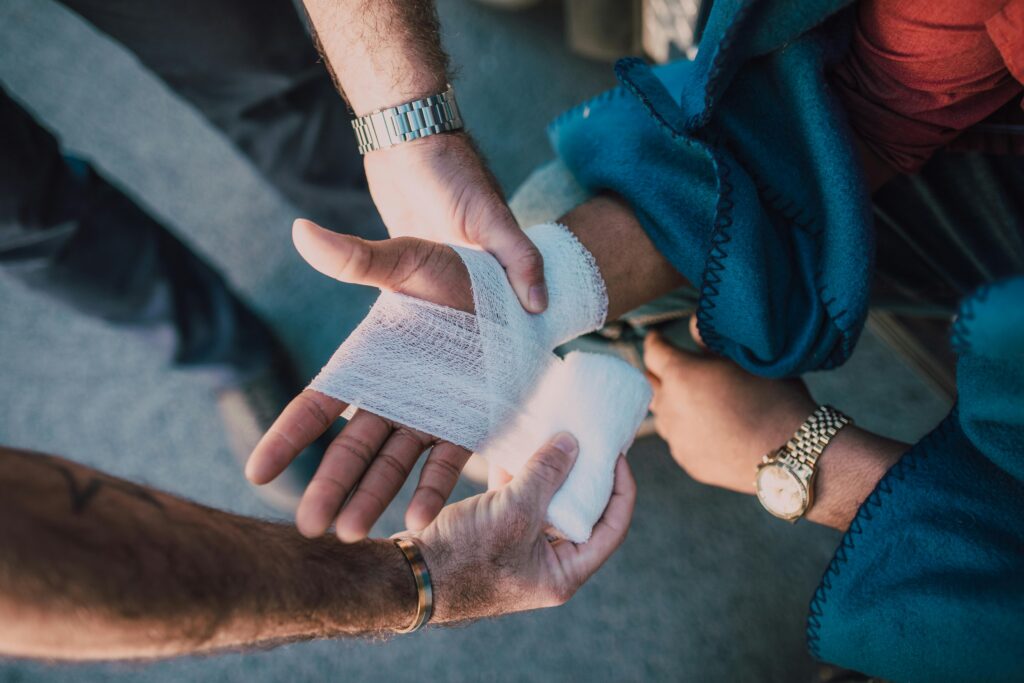
First aid is simply the help given to a sick or injured person until full medical treatment is available. I’m not suggesting everyone should become a doctor or nurse – just that we each have the ability to provide support until an ambulance or first responder arrives.
There are a wide range of training options available – from short 3-hour courses to more in-depth 3-day qualifications. There are even specialist courses for parents, such as Mini First Aid, which my friend Naomi runs across Suffolk. These sessions cost just £20 per person – a bargain for the peace of mind that comes with knowing what to do if your child needed urgent help.
The Suffolk Fire and Rescue Service also offer free awareness training for bikers, covering incident scene management, casualty care and visibility. They recognise that when a motorcyclist is injured, it’s often another rider who is first on the scene.
There are many more brilliant courses out there – the key is being proactive and spreading the word when you find a good one.
Making first aid more accessible
I’m proud to be a first aid trainer for Ocala Healthcare. As soon as I qualified, I organised a session for my family and friends – many of whom are self-employed or stay-at-home parents and wouldn’t otherwise be offered training through work.
My mum, aged 53, attended her very first first aid course that day. Everyone found it hugely valuable – not just for the knowledge, but for the confidence it gave them. They especially appreciated the practical parts of the session, including practicing CPR on a manikin and using our choking vest.
I’ve also offered to run basic first aid sessions for charities – because I’m determined to do my part in making first aid training more accessible to everyone.
What next for you?
If you’re employed, speak to your manager and ask if they’d support you in completing a first aid course. If you’re self-employed or not currently working, have a look at what’s available locally and book yourself onto a course.
You’re also welcome to contact us to book a place on one of our Basic Life Support training sessions. Hopefully, you’ll never need to use the skills you learn – but if you do, you’ll be glad you have them.